Even Prime Minister Sir Keir Starmer admits he isn’t fully in control of what happens in the UK

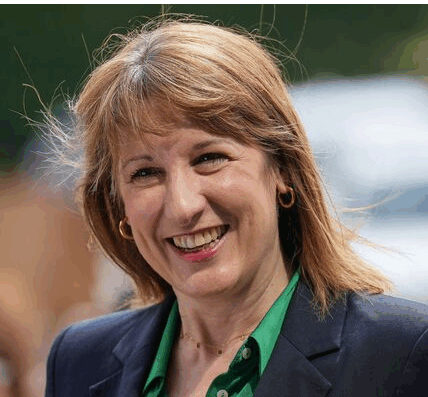
Baroness Louise Casey is one of those making key decisions (Image: Iain Buist/Newcastle Chronicle)
Who runs Britain? The answer is more complicated than you think.
There are the obvious candidates. Sir Keir Starmer, the Prime Minister, and Rachel Reeves, the Chancellor, are paid to make the big decisions. But there’s also a network of special advisers, Whitehall mandarins and party apparatchiks, who rarely appear on the telly but pull the strings behind the scenes.
And power isn’t confined to Whitehall. There’s a network of mayors and council leaders, and heads of our great institutions such as the BBC. And a new generation of social media moguls exercise enormous influence on our country – but live overseas, where British laws cannot reach them.
The politicians

Prime Minister Sir Keir Starmer has the power to hire and fire Cabinet ministers (Image: Getty)
Let’s start with the easy one. The British Government will spend £1,370billion this year, and the man in charge is the Prime Minister – currently Sir Keir Starmer, despite calls from some quarters for him to quit.
His power comes from three sources. He can appoint or sack government ministers, including the Chancellor, which means they only remain in their jobs for as long as he chooses.
He can command a majority in Parliament, effectively allowing him to decide which laws are passed. And he advises the monarch on the use of the Royal Prerogative – ensuring any powers that technically remain with the King, such as the right to declare war, are really exercised by the Prime Minister.
Other Cabinet ministers are important. Traditionally, the three “Great Offices of State” include the Chancellor, the Home Secretary, currently Shabana Mahmood, and the Foreign Secretary, Yvette Cooper. But in our system, more so than in many other countries, power is centralised at the very top.
Prime Ministers aren’t invincible, however. If they lose control of Parliament, or run out of loyal colleagues to put in the Cabinet, that usually means their days are numbered – as we saw in recent years with Theresa May, who was unable to get vital Brexit legislation through the Commons, or Boris Johnson, who was hit by a string of cabinet resignations. It remains to be seen if Sir Keir will be the next Prime Minister to face the sack.
Another limit on the Prime Minister’s power is the fact that the British state just isn’t very good at getting things done. Sir Keir explained this clearly when he complained last year: “Every time I go to pull a lever, there are a whole bunch of regulations, consultations, arms-length bodies, that mean the action from pulling the lever to delivery is longer than I think it ought to be.”
So if the Prime Minister isn’t in charge, who is? The awful truth is that there may be nobody. The UK is, to some extent, a rudderless ship.
The bureaucrats

Dame Antonia Romeo has been appointed Cabinet Secretary (Image: PA)
But there are rival captains. Top of the list until very recently was Sir Chris Wormald, head of the civil service. Those old enough to remember Sir Humphrey Appleby, the scheming civil servant in sitcom Yes Minister, will know it portrays a world where civil servants run the country behind the scenes – and former Prime Minister Margaret Thatcher once described the show as “so true”.
Oxford graduate Sir Chris, 57, was the real-life Sir Humphrey. His removal at the hands of the PM has left a vacuum in Number 10, and he has now been replaced by Dame Antonia Rebecca Caroline Angharad Catherine Romeo, another Oxford alumnus. Aged 51, she was previously the top civil servant in the Home Office, and has also served in the Ministry of Justice and the Foreign Office.
Some mandarins climb the greasy pole through years of dedicated work in the civil service. Others play the dirty game of politics, but do it behind the scenes. In recent years there was no better example than Morgan McSweeney, Sir Keir’s former chief of staff. Some said he was more powerful than the Prime Minister.
The Irishman, husband to Labour MP Imogen Walker, was a smart political operator who led Labour’s successful campaign in the 2024 general election.
But perhaps his most significant role was as director of think tank Labour Together, back when Labour was led by left-winger Jeremy Corbyn. It became the home of Labour “moderates”, including Ms Mahmood and Steve Reed, now the Housing Secretary, and the group picked Keir Starmer as the candidate to support in Labour’s leadership contest once Mr Corbyn quit.
In other words, Labour Together helped choose the Labour leader, who went on to become Prime Minister.
Like Sir Chris, McSweeney has lost his job thanks to the ongoing chaos in Downing Street. A replacement has not yet been confirmed.
The experts
Some people are ensconced in the centre of government but others hover around the periphery while still exercising enormous influence.
An example is Louise Casey, otherwise known as Baroness Casey of Blackstock, who has developed a reputation as the person governments turn to when they’re in trouble.
A former deputy director of homelessness charity Shelter, she was drafted in by the Labour government to lead efforts to cut rough sleeping in 1999. She oversaw a campaign to cut anti-social behaviour and promoted ASBOs, a favourite policy of Tony Blair’s government in its drive to fight “yob culture”.
Baroness Casey has since served as the official champion of victims of crime, enjoyed a second stint fighting rough sleeping, led efforts to help “troubled families”, headed an inquiry into the state of the Metropolitan Police and produced a report on grooming gangs. She’s currently in charge of a government inquiry into adult social care, an issue numerous governments have grappled with.
The nations and regions

Council leader John Cotton (Image: Nick Wilkinson/Birmingham Live)
Not all power resides in Whitehall. The first ministers of Scotland, John Swinney, and Wales, Eluned Morgan, are big figures in their parts of the UK, and the regional mayors in England, such as Andy Burnham in Greater Manchester, also enjoy significant influence.
However, in the UK’s centralised system, Parliament retains the power to abolish the Scottish and Welsh governments if it ever chose to do so. And Mr Burnham, like other regional mayors, still has to go cap in hand to the Treasury if he wants funding for major projects such as a new railway.
In fact, old-fashioned local councils have more direct influence over our lives, running social services and youth services, providing housing, supporting schools and more. You probably haven’t heard of John Cotton, the leader of Birmingham City Council, but he oversees a Budget of £3.2 billion.
The establishment

Met Police Commissioner Mark Rowley (Image: Getty)
The heads of our institutions exercise enormous power – but with one crucial caveat. Examples include Tim Davie, the Director General of the BBC, currently in the process of stepping down following a row about the BBC’s news coverage, or Mark Rowley, Commissioner of London’s Metropolitan Police.
But in the highly-centralised UK, ultimate control of our public bodies once again lies in Westminster. For example, Culture Secretary Lisa Nandy is overseeing a review of the BBC’s future, and Mr Davie or his successor will have to accept its conclusions. The Home Secretary, meanwhile, has announced new laws that will give her the power to sack police chiefs who she judges to be failing.
The billionaires

Mark Zuckerberg (Image: Getty)
What the government can’t do is to control people outside our country. The most obvious example is Elon Musk, owner of social media network X, which has an audience of around 21 million in the UK.
He’s been in the spotlight because of his relationship with US President Donald Trump, and a perception that he has allowed offensive content to proliferate on his service.
But Mark Zuckerberg, who holds majority shares in Meta, is more even more significant. While Mr Musk is outspoken and controversial, Mr Zuckerberg keeps a low profile. However, Meta, which owns Facebook, Instagram and more, has an audience of 50 million in our country.
Commons committees have launched numerous inquiries into social media companies in recent years. Government ministers make speeches about the harm they are believed to do to young people, and laws such as the Online Safety Act are designed to rein them in.
Our politicians score the odd victory, including persuading Mr Musk recently to prevent his “Grok” AI service from creating photos of people in bikinis. And national legislation can affect how global businesses operate, as seen in Australia, where under-16s have been banned from using major social media services.
But the US billionaires who dominate the internet are largely unaccountable to anyone in the UK.
The King

Charles III (Image: Getty)
There’s one more person who must be included on any list of the most powerful people in Britain – but it’s unclear how much power he really wields.
In theory, the King needs to approve all new legislation. But Royal Assent is now a formality. Charles III approves whatever Parliament puts in front of him.
However, he remains the head of the royal family, one of our most important institutions, and still makes decisions about its future, as we saw when Andrew Mountbatten-Windsor lost his royal title.
He also gets to meet the Prime Minister every week – an opportunity many would kill for – and has the right to “advise and warn” our elected leader. Those audiences are entirely private, and we cannot know if the King is influencing the work of government.
In addition, Charles III is our most important ambassador to the world at large. He has been deployed to charm US President Donald Trump, as his mother was before him, and maintains close relations with the royal family in Saudi Arabia, a crucial UK ally despite its poor human rights record.
The monarchy may be far less powerful than it was, but the King remains one of the most important people in the country.