Defence Secretary John Healey warned Tehran is carrying out “increasingly indiscriminate attacks” – including on civilian targets.

A plume of smoke rises following reported explosions in Tehran on March 1, 2026. Ayatollah Ali Khame (Image: AFP via Getty Images)
Britain is “not being governed” after Labour repeatedly refused to say whether they supported American and Israeli airstrikes on Iran.
Defence Secretary John Healey warned Tehran is carrying out “increasingly indiscriminate attacks” – including on civilian targets.
But he repeatedly refused to say whether the American and Israeli strikes on Iran – which killed Supreme Leader Ali Khamenei – were legal or whether the UK even supported them.
Asked if Labour was on “the side of those two countries who have killed Iran’s Supreme Leader”, Mr Healey said: “People watching will want to know now, today, that Britain is on top of what’s necessary, to do what we can to keep them safe, to reinforce regional stability, prevent further escalation.”
Furious Tory leader Kemi Badenoch blasted: “Britain’s Defence Secretary can’t tell us if our government supports the strikes on Iran. The Labour government has already lost all support and all credibility. It now can’t answer simple questions. We are not being governed.”
Former Security Minister Tom Tugendhat said: “The problem with John Healey’s silence is that he’s not refusing to share internal government discussions, he’s refusing to say who governs Britain.
“Is it the Prime Minister in the interest of the British people taking actions to keep us safe? Or Is it a legal code interpreted by an unelected priestly class applied only to the UK and that leaves us exposed and vulnerable?”
British aircraft have been deployed on defensive operations, flying from Cyprus and Qatar and “taking down” drones and missiles “menacing” UK bases and allies, Mr Healey added.
Explosions were heard in multiple Gulf states as Iran vowed to carry out its “most intense operation” ever in retaliation for the killing of Supreme Leader Ayatollah Ali Khamenei.
The 86-year-old Mr Khamenei had ruled Iran for almost 37 years when he was killed in the US-Israeli attack on Saturday morning, throwing the future of his country into doubt.
The Israeli military said it had carried out further air strikes in the Iranian capital to “establish aerial superiority and pave the path to Tehran”.
Mr Healey warned on Sunday that Iranian retaliation could put UK personnel and allies at risk.
He said: “When I talk about increasingly indiscriminate attacks I know people at home will be worried that, not just military targets were hit yesterday but also we’ve seen hotels in Dubai and Bahrain, we’ve seen Kuwait civilian airport; but in that Bahrain military base that was hit by missiles and drones yesterday we had 300 British personnel, some within several hundred yards of the strike.
“In Cyprus we had two ballistic missiles fired in the direction of Cyprus; now we are pretty sure they weren’t targeted at Cyprus but nevertheless it demonstrates how our bases, our personnel, military and civilians at the moment are at risk with a regime that is increasingly indiscriminate, widespread and uncontrolled in the attacks it’s mounting.
“Several weeks ago, we reinforced Britain’s defences in the region, more radars, planes and weapon systems.
“We were flying British planes in the air throughout yesterday and overnight, that’s defending our regional allies.
“It’s reinforcing that security and it’s trying to protect first and foremost our British bases and our British personnel which is my principal priority as British Defence Secretary.”
The Government, along with France and Germany, has condemned Iran’s retaliation and urged Tehran to return to the negotiating table.
But other allies have gone further, with both Canada and Australia saying they supported the US “acting to prevent Iran from obtaining a nuclear weapon” and continuing to threaten “international peace and security”.
The Government’s reluctance to say whether it backed the strikes has drawn criticism from parties to both its left and right.
Conservative shadow foreign secretary Dame Priti Patel said the Government should have been “more proactive” in supporting the strikes.
She said: “Why were some of our bases not used? And was the British Government asked about use of our military bases in the defensive strikes that took place?”
And Mr Healey’s responses will spark fresh fears over Labour’s weakness on the international stage.
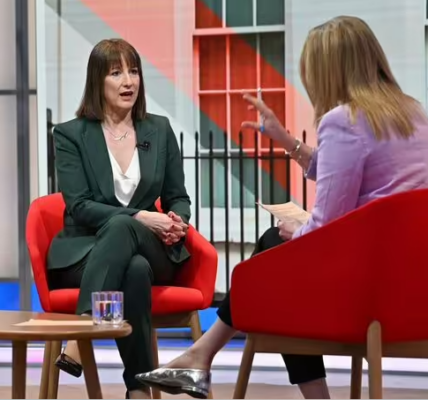
BBC presenter Laura Kuenssberg asked Mr Healey: “Do you believe this action was within international law?”
Mr Healey responded: “We played no part in the strikes, we just didn’t participate and it is for the US to set out the legal basis of the action that it took.”
Pressing the defence on whether Labour supported the military strikes, the BBC host asked: “Other important allies of the UK have, so Canada for example, Australia for example, close allies of yours and of this country’s, have both said explicitly that they do back what America and Israel have done and you’re taking a different position.”
Mr Healey said: “I’m here as British Defence Secretary, our first focus and all our action is defensive.
“It’s within international law, it’s coordinated with regional allies to make sure that we can reinforce and protect, not just our UK personnel and people, but UK allies, bases and partners in the region, and we share that long term aim.
“We share that determination that Iran should never have a nuclear weapon and we share the long term.”
Ms Kuenssberg hit back: ”That’s a different answer to the question of whether or not you back these dramatic, some would say audacious and courageous, some would say reckless and dangerous actions by America and Israel. Do you think it was reckless or do you think it was right?”
She added: “Is Britain on the side of those two countries who have killed Iran’s supreme leader?
“People watching will want to know now, today, that Britain is on top of what’s necessary, to do what we can to keep them safe, to reinforce regional stability, prevent further escalation, and that’s my task and that’s my priority as Defence Secretary of the UK.”