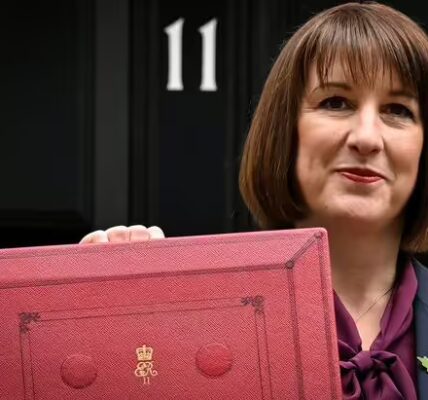
OPINION: Keir Starmer’s mistakes will come back to haunt him in the upcoming by-election

Leo McKinstry says Keir Starmer is bracing for an awful by-election result (Image: Getty)
Nigel Farage is routinely condemned by his opponents as authoritarian and extreme. But he has done more for British democracy than any current Labour politician. It was his heroic campaign for Brexit that freed us from rule by unelected Brussels bureaucrats, then smashed the Parliamentary stalemate that threatened to overturn the Referendum result.
This week, the Reform Party leader pulled off another democratic triumph. As a result of a lawsuit that he took against the Government, Labour Ministers dropped their plans to cancel elections this May in more than 30 local authorities. The supposed justification for this shutdown was that these councils are soon to be reorganised so elections were an unnecessary distraction.
This argument was dangerously spurious. Never in our history has there been a suspension of democracy on such a scale. Reorganisations of local government have occurred before without the denial of the vote to millions.
Even during the Second World War, by-elections were held, often with highly consequential outcomes. The Wandsworth Central contest in June 1940, for instance, brought heavyweight trade unionist Ernie Bevin into Parliament to mastermind the national workforce, while the defeat of the official Government candidate by the maverick Daily Express columnist Tom Driberg at Maldon in mid-1942 led Churchill to restructure the British military offensive in North Africa.
The suspected real reason for this election shambles is that Labour strategists wanted to avoid a municipal drubbing. Now the humiliation will probably be even worse than they initially expected. But before those local elections in May, Starmer faces another highly pressurised test of public opinion, one that could even bring his leadership to an end.
This Thursday, the by-election will be held in the south Manchester constituency of Denton and Gorton to fill the vacancy left by the outgoing Labour MP Andrew Gwynne. Given that he had a majority of 13,400, this should be rock solid Labour territory. But among traditional working-class voters, there is a profound sense of disillusion and betrayal which means Sir Keir’s party may be lucky to finish third.
The election seems to have become a two-horse race between the Reform’s Matt Goodwin and the Greens’ Hannah Spencer. Articulate, patriotic and a deep thinker about the state of Britain, Goodwin would make a fine MP. Less impressive is Spencer, a classic woke warrior who is “open” to the abolition of the police, wants prostitution to be decriminalised and wails that it is Reform rather than Islamist radicalism that “divides people”.
Despite the verdict of local journalists that the election is “too close to call,” the bookies have made the Greens the favourites to win. There are three factors behind this stance. One is the high level of potential tactical voting, with left-wing Labour and Liberal Democrat voters reportedly uniting behind the Greens to keep out Farage’s party. Another is the deepening political alliance between the Green Party and Islam, forged partly by their shared hostility to Israel.

Matt Goodwin, Reform’s candidate in the by-election, pictured with Nigel Farage (Image: Getty)
This is particularly important in a seat where one quarter of the electorate is Muslim. The third is the charisma of the new Green leader Zack Polanski who has captured the imagination of urban, progressive types in a way that stolid, stumbling Starmer never could.
If Sir Keir wins on Thursday it will be a huge upset, even outshining the dramatic comeback of Stanley Baldwin in 1931. On the verge of resignation as Tory leader after a barrage of press attacks, he gave a brilliant platform speech – written by his cousin Rudyard Kipling – at the crucial St George’s by-election in London that brought victory to his party and political salvation to him.
Alternatively, a Labour defeat will plunge Starmer’s party into another, perhaps terminal, leadership crisis. Harold Macmillan was doomed by the surprise Liberal triumph at Orpington in 1962, just as Margaret Thatcher’s fate was all but sealed by the loss of Eastbourne in 1990.
The irony is that Labour’s best hope of retaining Denton would have been to select the popular Manchester Mayor Andy Burnham as their candidate. But the decision to block Burnham was another indicator of Starmer’s chronic weakness – which is costing our country dearly.

Prime Minister Keir Starmer says he knows nothing about the dark arts (Image: Getty)
Starmer’s ‘lifeblood of democracy’ claims are looking a bit thin
In September 2024, the new Prime Minister Sir Keir Starmer grandly declared that “journalism is the lifeblood of democracy and journalists are the guardians of democratic values”.
How empty those words now sound after the shocking revelations that the shadowy pressure group Labour Together, which played a key role in bringing Starmer to power, conducted extensive smear and snooping operations against Sunday Times journalists Gabriel Pogrund and Harry Yorke.
Through their investigative journalism, this highly respected pair showed that between 2017 and 2021 Labour Together, then headed by Morgan McSweeney, who later became Starmer’s Chief of Staff, had received around £730,000 in donations but had failed to register them with the Electoral Commission, as required by law.
Instead of showing any contrition when the story was published in 2023, Labour Together paid a public relations consultancy £30,000 to look into the private lives of the two journalists. Predictably the disgraced peer Peter Mandelson and a close associate of McSweeney’s, is said to have been involved in Labour Together’s sinister drive to spread whispered gossip with the aim of undermining the credibility of the newspaper.
As usual Starmer says he knows nothing about these dark arts, but then he always claims to be ignorant about every incriminating scandal that crosses his desk. He has set up an internal inquiry to investigate Minister Josh Simons, who just happens to have been a former director of Labour Together.
The whole tangled saga is profoundly unBritish. It sounds more like something from East Germany in the 1970s than from the land that gave the world Magna Carta and pioneered Parliamentary democracy.
Finally, a dose of honesty for the “damned lies” of the poverty lobby
It was the 19th century statesman Benjamin Disraeli who said that there are “lies, damned lies and statistics”. His cynical view can certainly be applied to the poverty lobby with its exaggerated claims of destitution in modern Britain. But now, in a small breakthrough for the truth, the Department of Work and Pensions (DWP) is expected to lower official estimates of the number of children living in poverty.
The change is happening because, from next month, the Department is to use real information from actual benefit records, whereas, under the previous flawed methodology, it relied on testimony from the welfare claimants themselves, who tended to downplay the amount of money they received.
The gap between perception and reality can be enormous. In 2023, according to household surveys, the amount paid out in benefits was £190billion. But the DWP’s data showed that the true figure was £243billion, no less than £53billion higher. The debate about the future of welfare will be all the heathier when it is free from sentimentality and emotive propaganda.
Duvall was a true Scot at heart

Robert Duvall who played Tom Hagen in The Godfather passed on Saturday (Image: CBS via Getty Images)
The Oscar-winning actor Robert Duvall, who died this week at the age of 95, was one of the icons of Hollywood, renowned for his memorable roles like the deranged commander in Apocalypse Now and the tough mob lawyer in the Godfather. But several tributes also covered another fascinating, little-known aspect of his life: his devotion to Scottish football.
This interest was sparked when he made the film A Shot at Glory in 1998 about a lower league Scottish manager embarking on a romantic cup run. His interest in the Caledonian version of the sport never left him. He became friends with Rangers legend Ally McCoist and was such an admirer of the Celtic winger Jimmy Johnstone that he even named one of his dogs after him.
“He was such a great character,” said Duvall of Johnstone. That was also how almost everyone also felt about Duvall.