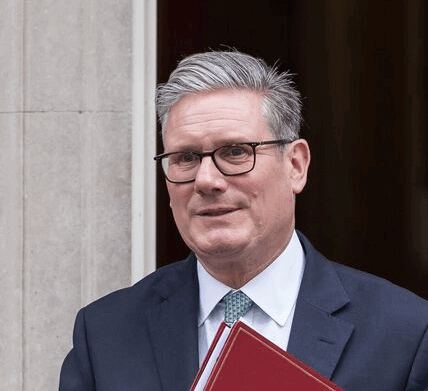
The minister who oversaw radical immigration reforms in his own country called a system like the UK’s “fundamentally wrong”.

The minister called an immigration system like the UK’s ‘fundamentally wrong’ (Image: Getty)
Parts of England which lack ethnic diversity should be made to take their fair share of migrants, a Danish minister who oversaw radical immigration reforms has suggested. Kaare Dybvad Bek, Denmark’s employment minister, said that he found it “curious” that the north of England was very diverse compared to parts of the south, describing such a separation as “fundamentally wrong”.
“This is different from our [Danish] culture. I think also that there are some things that are fundamentally wrong – to segregate towns and cities,” Mr Dybvad Bek said at an event in Westminster on Monday (February 16). “I think it is wrong also to give special rights based on ethnic or religious groups. I think that we need to have a society where everyone has the same rights.” Having travelled around England with his family several years ago, visiting areas like Somerset and Dorset, he questioned: “Why don’t you make the people in Somerset also take part in this task for the nation?”

Kaare Dybvad Bek said people in Somerset should ‘also take part in this task for the nation’ (Image: Getty)
Mr Dybvad Bek is part of the leading centre-left Social Democratic Party, which has been in power in Denmark since 2019 and has shifted immigration policies to the right, while also introducing progressive policies on climate and healthcare. UK Home Secretary Shabana Mahmood has sought to emulate Denmark’s success with her own reforms to the asylum system and legal migration, including the Government’s new rules on who can permanently settle in the UK. In Denmark, conditions are imposed on benefit claimants, as well as financial and language restrictions.
Denmark has one of the toughest immigration systems in Europe and has also taken a tough approach to integration, with a law that allows the state to demolish apartment blocks in areas where at least half of the residents have a “non-Western” background – dubbed the “Ghetto law”.
Mr Dybvad Bek defended the radical approach, arguing that “hostile” concrete estates were exacerbating people’s social problems and discouraging integration with Danish culture.
“We have an estate in our third largest city, with around 9,000 people living in concrete buildings, with 77% from non-Western countries, 52% are out of work.

Denmark has one of the toughest immigration systems in Europe and a tough approach to integration (Image: Getty)
“This doesn’t give people who grow up there an opportunity to understand Danish society […] how to navigate our society. We want these areas to become more attractive to working and middle-class families.”
He added that public housing was introduced into wealthy areas so that different parts of Denmark took on the “burden in integrating people”.
Denmark had also explored processing migrants’ asylum claims outside the country and had talks with the Rwandan government, but Mr Dybvad Bek said that plans for an East African asylum hub have been ruled out, with the priority instead being to build relationships with other European countries.
In a warning to left-wing parties across Europe, he said: “There is no other choice for people who want to be representing working class communities […] you need to also have democratic control of migration flows,” adding that the public’s concerns about immigration “needs to be solved by centre-right and centre-left, otherwise we will all be populist governments at some point”.