More than 6,000 people died while waiting for a decision on whether to provide them with urgently-needed support

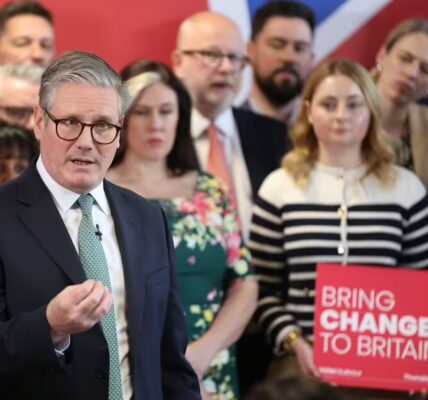
A commission on improvements to social care is to report to the Prime Minister (Image: Getty)
A crisis in social care meant more than 6,000 people died while waiting for a decision on whether to provide them with urgently-needed support. The dire figure highlights the long wait facing adults who apply for help. But furious campaigners accused the Government of failing to act, after a cross-party commission launched by Sir Keir Starmer to fix the problem met only once in 12 months.
Data was uncovered by Liberal Democrats, who are calling on Sir Keir to take personal charge of fixing the problem. Liberal Democrat Health spokesperson Helen Morgan said: “He needs to personally get a grip of this crisis, end this negligence and finally show whose side he’s on. It is a national tragedy that 6,000 elderly and vulnerable people have died whilst stuck on waiting lists for care.”
Official figures show that 6,200 people who requested care in the last financial year died before any decision was made about whether to provide it. Nearly 900.000 adults had requests for social care turned down in the same period, with many given “information or advice” instead.
It comes after an inquiry by MPs found 3.5 million adults are being denied the care they need, “leading to lives led at the bare minimum rather than to their fullest” after successive governments failed to act.
Sir Keir announced on January 3 2025 that the Government had launched an independent commission chaired by Baroness Louise Casey, to “grasp the nettle” and fix Britain’s broken care system. Reporting directly to the Prime Minister, it involves politicians of all parties in a bid to build a consensus on the creation of a new national care service.
But only one cross-party meeting has been held, when representatives of Labour, Conservatives, Liberal Democrats, Greens and Reform UK gathered in Whitehall in September.
Dennis Reed, Director of Silver Voices, said: “Baroness Casey needs to reflect on the urgency of the situation, with thousands dying while they wait in vain for the social care which could have extended their lives.”
Delays in the social care system are also contributing to hospital waiting lists. More than 13,000 patients on any given day are stuck in hospital in England even though they are medically fit to leave but cannot be discharged, often because suitable care is no available in the community.
Eamonn Donaghy, spokesperson for campaigners Later Life Ambitions, said: “Reform of the social care system is desperately overdue given millions of older people don’t know how they will be cared for in old age.
“Delayed discharges are not a hospital problem alone – they are a symptom of a social care system that has been allowed to fray for far too long.”
Failings in the official care system means the burden of providing help often falls on loved ones, according to campaigners.
Helen Walker, Chief Executive of Carers UK, said: “There are 4.7 million people in England alone providing a staggering £152 billion worth of unpaid care every year to family members, friends or neighbours who are older, have a long-term illness or disability.
“Whilst we have been encouraged by initial discussions between Baroness Casey and unpaid carers, a year on, there is no time to waste. The Independent Commission must now gather momentum to build consensus to rebuild the social care system.”
A Department of Health and Social Care spokesperson said: “We inherited a social care system in desperate need of long-term reform – that’s why we commissioned Baroness Casey to provide an independent roadmap to building a National Care Service for all, with the first steps due this year.
“We are also taking immediate action: making available a funding boost of more than £4 billion, money for an extra 15,000 home adaptations for disabled people, the biggest uplift to the Carer’s Allowance threshold since the 1970s, and the first ever Fair Pay Agreement to boost recruitment and retention in the workforce.”
But Caroline Abraham, Charity Director at Age UK said: “A year on from the start of the Casey Commission we haven’t seen any tangible improvements to social care as a result – but then we were never going to because the commission is not due to complete its work until 2028, with just an interim report due out this year.
“This long drawn-out timescale was set for the commission by the Government and reflects a decision on its part to delay the comprehensive social care reform we so badly need until after the next General Election. As the months go by that decision is looking more and more short-sighted.”
Simon Bottery, Senior Fellow at think tank the King’s Fund, said: “The government took too long to set up the Casey commission and people who rely on care services cannot afford further delays. There is no guarantee the recommendations it finally delivers will meet their needs, or that the government will implement them if they are.”