Usha Vance: From Yale Law Star to America’s Second Lady, and the Woman Who Guides JD Vance

Before she became the Second Lady of the United States, Usha Vance was already extraordinary in her own right. She and JD Vance first crossed paths as students at Yale Law School
, where she quickly distinguished herself not just by intelligence but by a presence that seemed almost magnetic.
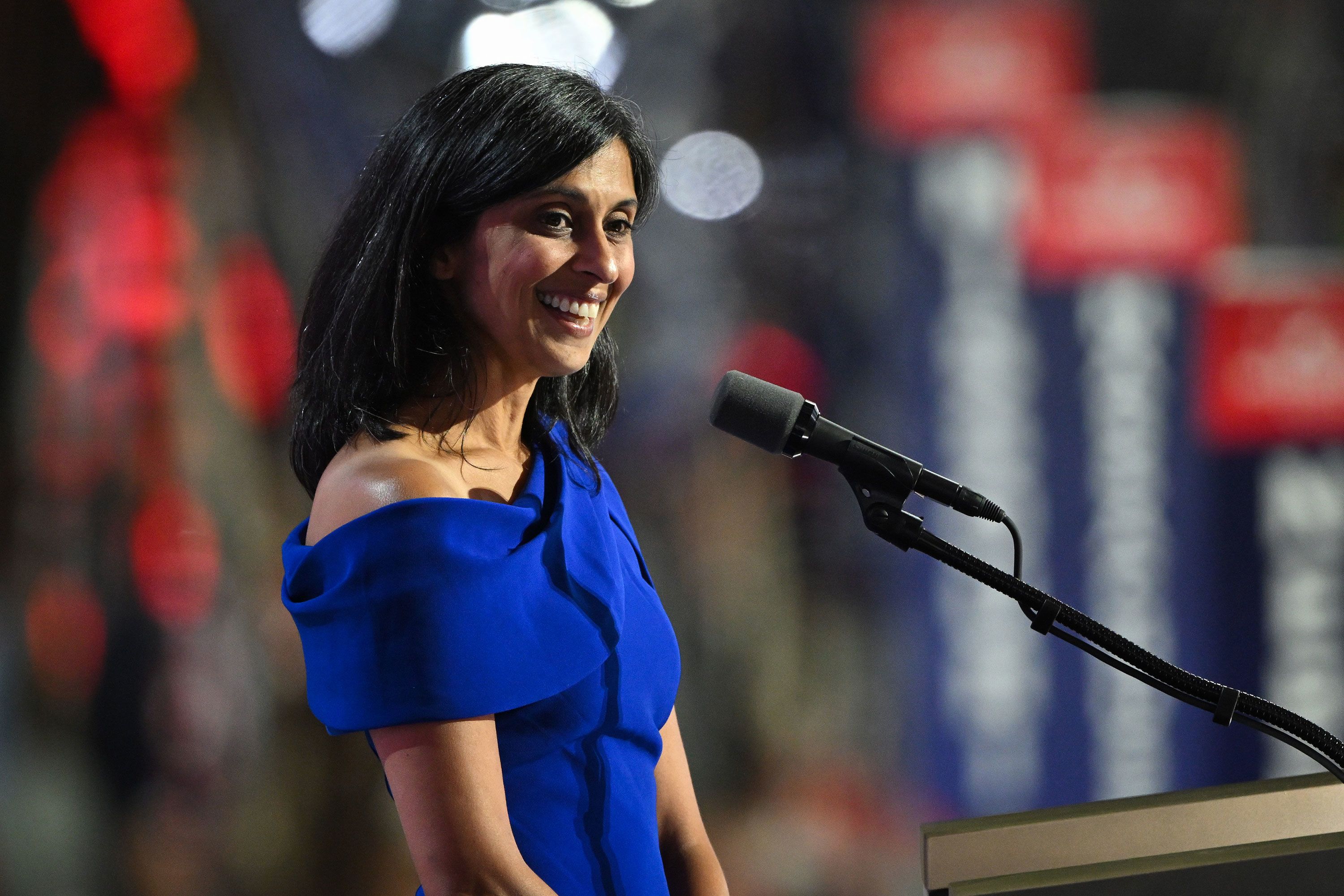
In JD Vance’s 2016 memoir, Hillbilly Elegy, he described her as “some sort of genetic anomaly, a combination of every positive quality a human being should have: bright, hardworking, tall, and beautiful,” calling her his “spirit guide.”

Usha’s career was equally impressive. She worked as a lawyer at Munger, Tolles & Olson, a top firm specializing in litigation and corporate law, building a professional identity based on excellence, sharp intellect, and independence.
Long before the public spotlight, she had already defined herself on her own terms — a trait symbolized, as some have noticed, by the absence of her wedding ring in public appearances: a subtle reminder that she belongs first to herself.

Her life took another dramatic turn when JD Vance became President Trump’s running mate in 2024. Overnight, Usha transitioned from private professional life to public service, moving her family from their home in
East Walnut Hills, Cincinnati, to the United States Naval Observatory, the traditional residence of the vice president’s family.
Throughout it all, Usha’s focus has remained steady: family, professional excellence, and the quiet influence she exerts behind the scenes, shaping both her husband’s life and public work.

Beyond her public and professional roles, Usha is also the heart of the Vance family, providing stability, warmth, and guidance for their three children. Friends and colleagues describe her as fiercely devoted, balancing the demands of public life with her own personal values.
She has become a role model for women navigating ambitious careers while nurturing a family, demonstrating that leadership and compassion can coexist. Her ability to maintain grace under pressure and provide moral guidance has solidified her position not only as a Second Lady but as a central figure in the personal and public journey of JD Vance.
The story of Usha Vance is one of brilliance, independence, and love — a reminder that even those who walk alongside powerful figures have their own extraordinary journeys.
U.S. Vice President JD Vance Attends Mass at Jerusalem’s Church of the Holy Sepulchre

In a significant moment for both politics and faith, U.S. Vice President JD Vance attended a mass at the Church of the Holy Sepulchre in Jerusalem. The church, regarded as one of the holiest sites in Christianity, is traditionally believed to be the location of Jesus Christ’s crucifixion, burial, and resurrection. For many Christians, the church represents a crucial pilgrimage destination, and Vance’s visit underscores the strong religious ties that often intersect with global political events.
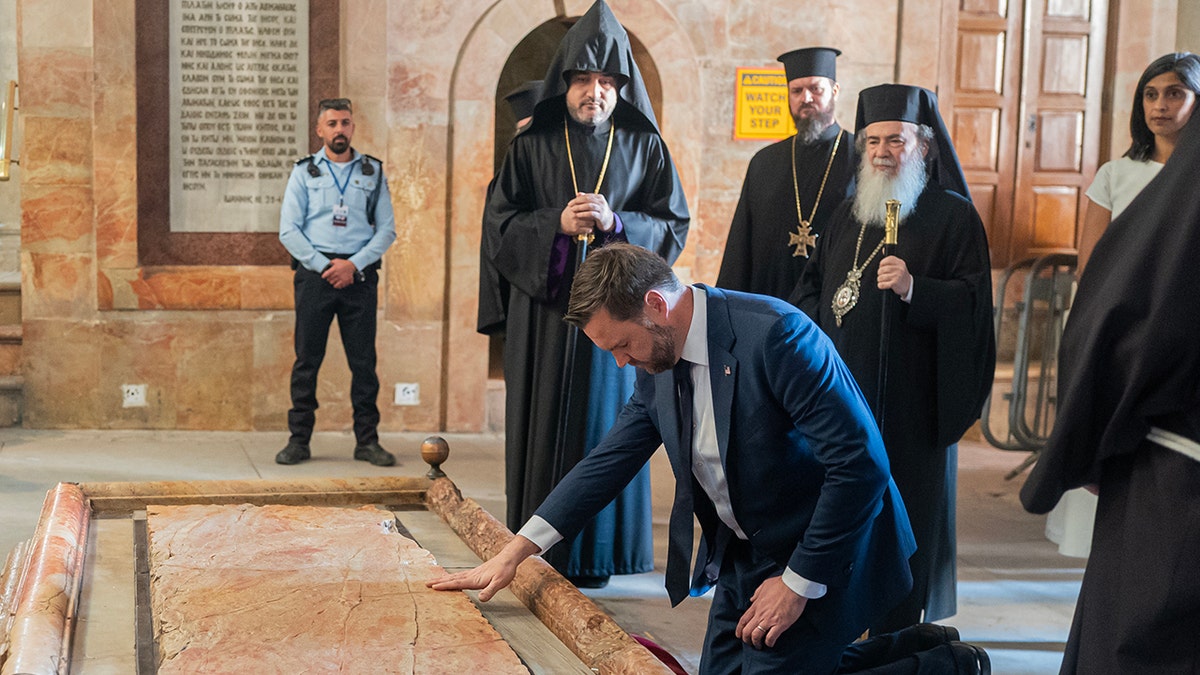
The Church of the Holy Sepulchre: A Sacred Landmark
The Church of the Holy Sepulchre, located in the heart of Jerusalem’s Old City, holds a central place in Christian tradition. It is built on the site where Jesus Christ is said to have been crucified, where his body was laid to rest, and where he is believed to have risen from the dead. As one of the most revered pilgrimage destinations in the Christian world, it attracts millions of visitors each year, drawn by the profound historical and spiritual significance of the site.
Vance’s visit to this sacred place reflects the deep connection between religious heritage and political diplomacy. In a region with complex religious and geopolitical dynamics, his presence at the church signals a recognition of Jerusalem’s significance to people of faith around the world.
A Pilgrimage of Personal and Political Meaning

While Vance’s visit to the Church of the Holy Sepulchre is steeped in Christian tradition, it also carries political weight. The church sits at the crossroads of Christian, Jewish, and Muslim histories, and Jerusalem itself is a city of profound significance for multiple religious communities. As Vice President, Vance’s attendance at the mass can be seen as part of a broader effort to engage with the religious and cultural heritage of the region, fostering diplomatic ties with leaders in both religious and political spheres.
For many Christians, a pilgrimage to Jerusalem is a deeply personal journey, one that connects them with the foundational events of their faith. Vance’s participation in this sacred event adds a personal layer to his political responsibilities, acknowledging the importance of faith in shaping the values and policies of world leaders.
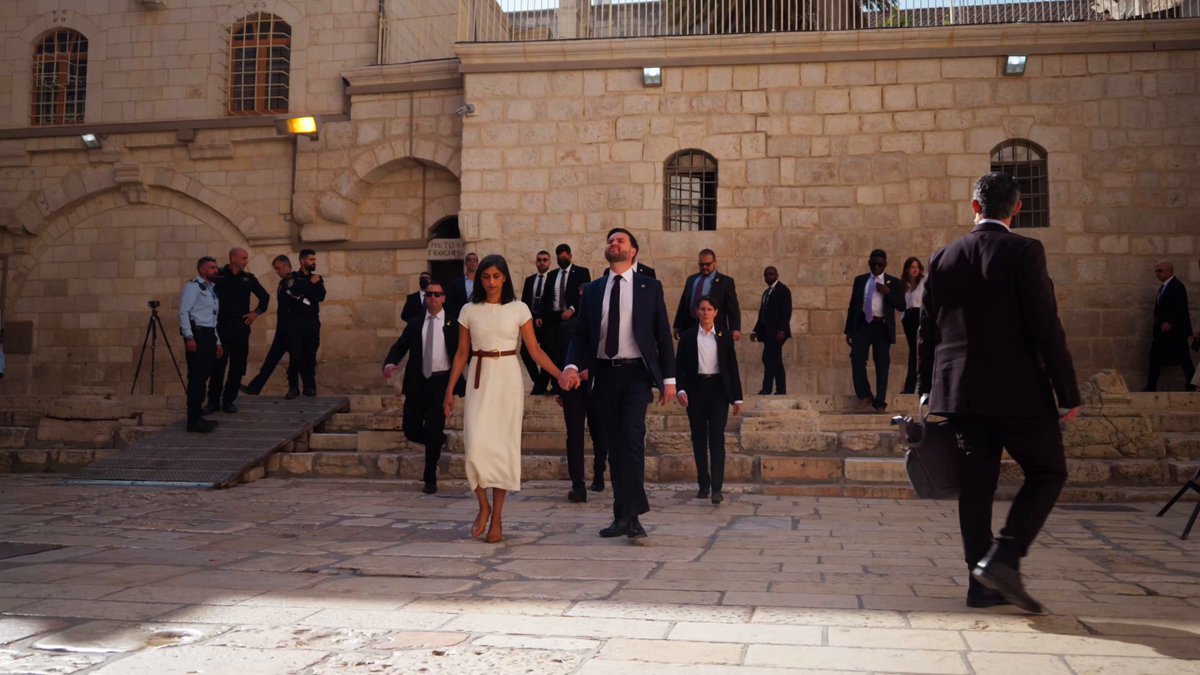
Symbolism of the Visit
Vance’s attendance at the mass is not just a ceremonial gesture—it holds deep symbolic meaning. The Church of the Holy Sepulchre, as a place of reflection on Christ’s life, death, and resurrection, provides a powerful backdrop for any political figure. For Vance, this visit could be seen as an opportunity to underscore his own faith and the role that religious conviction plays in his worldview and leadership.
At the same time, the visit offers a reminder of the delicate balance between politics and faith in international diplomacy. Jerusalem, as the city at the heart of three major world religions, serves as a symbol of unity and division, a place where the intersection of religious identity and political ideology is particularly evident.

U.S. Vice President JD Vance’s visit to the Church of the Holy Sepulchre represents more than just a religious observance—it is a statement of faith, diplomacy, and respect for the deeply rooted traditions of the Holy Land. By participating in mass at one of Christianity’s holiest sites, Vance demonstrates the intersection of personal belief with public office, highlighting the spiritual and political significance of Jerusalem. As the Vice President continues his engagement in the Middle East, moments like these underscore the complex role of faith in shaping global leadership and diplomatic relationships.